

STRESS
A Course on Practical Stress Analysis of Aircraft Structures
A Course on Practical Stress Analysis of Aircraft Structures
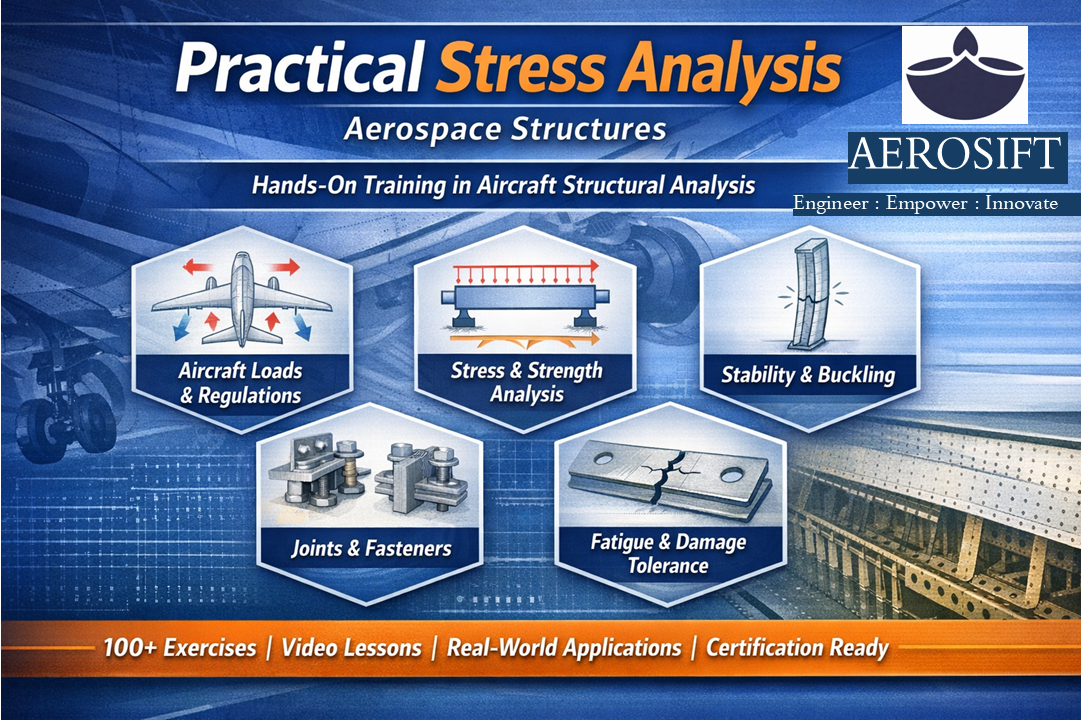
This Practical Stress Analysis course is a comprehensive, application-driven program focused on the structural analysis of aerospace components.
Delivered across six structured modules, the course progresses from regulatory requirements and global aircraft loading through interface loads, fundamental stress analysis, stability and buckling, joint design, and fatigue and damage tolerance.
Emphasis is placed on real-world engineering practice, with theory reinforced through more than 100 worked exercises, guided calculations, and end-of-module assessments.
Learners develop a strong understanding of how loads are generated, transferred, and resisted in aircraft structures, while gaining practical skills aligned with certification, safety, and airworthiness considerations.
01. Manoeuvre Loads
00:09:4102. Exercise 1G - Question
00:19:0003. Exercise 1G - Solution
00:03:4004. Gust Loads
00:02:0905. Exercise 1H - Question
00:01:3006. Exercise 1H - Solution
00:00:4007. V-n Diagram
00:06:2608. Flight Loads - Control Surfaces, control system loads - Case Study
00:03:2101. Seat track Interfaces, Cabin Interfaces
00:05:1102. Exercise 2G - Question
00:03:0803. Exercise 2G - Solution
00:13:3404. Cargo Loading Systems
00:00:4305. Fittings
00:01:5706. Exercise 2H - Question
00:00:2307. Exercise 2H - Solution
00:03:0808. Exercise 2I - Question
00:01:1809. Exercise 2I - Solution
00:00:1610. Interface Loads - Flexibility
00:01:3901. Failure, Material Strength, Strain Energy
00:00:3102. Exercise 3B - Question
00:01:1003. Exercise 3B - Solution
00:01:1604. Case Study - Flexibility Components
00:02:5505. Shear Stresses
00:01:4906. Exercise 3C - Question
00:00:2407. Exercise 3C - Solution
00:17:3608. Exercise 3C1 - Question
00:02:2409. Exercise 3C1 - Solution
00:00:5001. Axial loading - Inclined Sections, Types of Stresses and Strains
00:09:3102. Exercise 3D - Question
00:03:1703. Exercise 3D - Solution
00:00:5204. Exercise 3E - Question
00:07:3705. Exercise 3E - Solution
00:01:2806. Exercise 3F - Question
00:00:3107. Exercise 3F - Solution
00:01:5808. Shear Flow
00:01:0501. Plastic Bending
00:00:4402. Exercise 3M - Question
00:02:5603. Exercise 3M - Solution
00:03:4704. Plastic Bending, Shape Factor
00:02:0405. Exercise 3N1 - Question
00:00:4506. Exercise 3N1 - Solution
00:10:0307. Exercise 3N2 - Question
00:02:0108. Exercise 3N2 - Solution
00:02:0209. Plastic Bending - Neutral Axis, Anticlastic Bending
00:00:3701. Non Circular Members loading in Torsion, Thin Walled Closed Sections
00:00:3702. Exercise 3R - Question
00:00:2103. Exercise 3R - Solution
00:05:4904. Torsional Loading - Thin Walled Members Open Sections
00:04:5205. Exercise 3S - Question
00:01:5506. Exercise 3S - Solution
00:00:5007. Exercise 3T - Question
00:10:5708. Exercise 3T - Solution
00:01:2701. Types of Materials and Material Properties
00:30:0002. Material Strength and Allowable Values
00:30:0003. Limit and Ultimate Loads
00:30:0004. Exercise 3V - Question
00:30:0005. Exercise 3V - Solution
00:30:0006. Material Strength and Allowable Values, Regulations
00:30:0007. Exercise 3V1 - Question
00:12:2608. Exercise 3V1 - Solution
00:09:2709. Material Allowable Values Confidence Interval, Importance of Specification
00:05:0701. Material Failures, Theories, Reserve Factor and Margin of Safety
00:01:1302. Exercise 3W - Question
00:01:2503. Exercise 3W - Solution
00:03:1804. Exercise 3W1 - Question
00:01:2105. Exercise 3W1 - Solution
00:00:5406. Interaction of Failure Modes
00:07:0507. Exercise 3X - Question
00:01:0308. Exercise 3X - Solution
00:00:5501. Stress Concentration
00:01:2502. Exercise 3Z1 - Question
00:01:1003. Exercise 3Z1 - Solution
00:01:1204. Stress Concentration, Static Failure of Ductile Material, Strength of Notch
00:01:0605. Exercise 3AA - Question
00:01:0806. Exercise 3AA - Solution
00:05:5707. Exercise 3AB - Question
00:00:5208. Exercise 3AB - Solution
00:00:4709. Stress Concentration - Various Methods to Reduce
00:02:4401. Introduction
00:03:3602. Elastic Buckling of Columns
00:04:0303. Exercise 4A - Question
00:01:3804. Exercise 4A - Solution
00:01:2005. In-Elastic Buckling of Columns
00:03:5006. Exercise 4B - Question
00:01:1807. Exercise 4B - Solution
00:01:2408. Exercise 4C - Question
00:03:3509. Exercise 4C - Solution
00:05:1601. Inter Rivet Buckling
00:01:3502. Exercise 4K - Question
00:00:5803. Exercise 4K - Solution
00:00:5804. Sheet Wrinkling
00:01:5105. Case Study of Stiffened Panel Behaviour
00:01:3806. Stiffened Panels - General Design Guidelines, Integral Stiffener Panels
00:02:0407. Shear Panels and their behaviour under different Types of Loading
00:03:0101. Introduction
00:00:5402. Fasteners & Rivet Specifications
00:01:4203. Joints - Regulations
00:05:1304. Terminology, Failure Modes of Fasteners and Plates
00:01:0205. Exercise 5A - Question
00:00:3506. Exercise 5A - Solution
00:08:5507. Exercise 5B - Question
00:05:5208. Exercise 5B - Solution
00:01:4501. Load Distribution In Lap and Butt Joints
00:02:2502. Exercise 5D - Question
00:01:5003. Exercise 5D - Solution
00:01:3104. Exercise 5E1 - Question
00:04:3305. Exercise 5E1 - Solution
00:01:5206. Bolt Load Distribution in Eccentric Loading Joints
00:01:1007. Exercise 5E - Question
00:01:3408. Exercise 5E - Solution
00:01:4809. Exercise 5F1 - Question
00:01:0610. Exercise 5F1 - Solution
00:01:2811. Exercise 5F
00:02:0801. Fittings, Clips
00:00:4902. Exercise 5G
00:03:2803. Tension Clip- Guided Beam Idealisation
00:08:1704. Exercise 5H - Question
00:14:3605. Exercise 5H - Solution
00:03:2406. Exercise 5H2 - Question
00:01:0907. Exercise 5H2 - Solution
00:01:2308. Strength of Tension Clips, Case Study of Fittings
00:01:4201. Lugs, Failure Modes
00:01:3602. Exercise 5K - Question
00:01:1203. Exercise 5K - Solution
00:00:5504. Lug Loading & Pin Bending
00:01:4605. Exercise 5L1 - Question
00:01:3006. Exercise 5L1 - Solution
00:08:5607. Exercise 5L
00:01:0908. Exercise 5M1 - Question
00:01:1609. Exercise 5M1 - Solution
00:01:2710. Exercise 5M - Question
00:00:2611. Exercise 5M - Solution
00:01:4101. Understanding Stress Margins in Structural Integrity
00:01:4102. Fatigue Load Spectrum
00:01:3903. Fatigue Spectrum
00:05:0104. Exercise 6K - Question
00:02:1205. Exercise 6K - Solution
00:01:2706. Fatigue Spectrum - Cycle Counting Methods
00:00:4007. Exercise 6K2 - Question
00:11:1108. Exercise 6K2 - Solution
00:02:1409. Fatigue Spectrum - Equivalent Stress
00:01:0901. Residual Strength - Cracks, SIF
00:10:1902. Exercise 6N - Question
00:02:0203. Exercise 6N - Solution
00:01:3804. Residual Strength - Fracture Toughness, Crack Resistance Curve
00:01:3805. Exercise 6O - Question
00:01:1806. Exercise 6O - Solution
00:06:2307. Exercise 6O2 - Question
00:08:5808. Exercise 6O2 - Solution
00:07:0409. Exercise 6P - Question
00:00:3710. Exercise 6P - Solution
00:01:0001. Crack Propagation, Similitude, SIF Estimation
00:03:4102. Exercise 6Q - Question
00:02:1103. Exercise 6Q - Solution
00:00:5904. SIF & Influence of Hole
00:01:0805. Crack Propagation a-N Curve, Crack Propagation - Similitude
00:00:3906. Exercise 6R - Question
00:01:5507. Exercise 6R - Solution
00:01:3408. Crack Propagation
00:00:3909. Exercise 6S - Question
00:03:1710. Exercise 6S - Solution
00:01:34
21 Jan, 2026
Over the past seven years, I have had the pleasure of attending two of his training courses, as well as working with him on several projects. The courses were extremely well structured and delivered, with content that was both technically thorough and easy to follow. As a trainer, he is patient, highly knowledgeable, and able to engage and teach people at all levels, from apprentices to those with many years of industry experience. Lisa Chambers BEng CEng MRAeS
 Buy Now

Students
23
language
English
Duration
26h 14mLevel
beginner
Expiry period
6 Months
Certificate
Yes AeroSIFT
 English
 Certificate Course
 23 Students
 26h 14m
 7 Courses
 12 Reviews