
AeroSIFT
 0 comment
 24 Jun, 2026
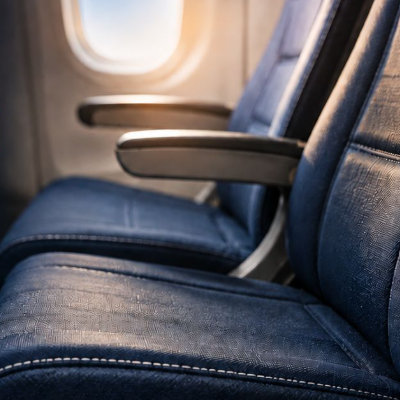
The existing PMA pathway for seat cushion replacement is well established in regulatory literature. But that pathway remains fragmented, costly, and inaccessible in practice — and it is precisely for that reason that the case for dedicated, consolidated regulatory guidance has become stronger, not weaker, with each passing year.
This article sets out the technical and regulatory argument for
why the authorities should act, and what that action should look like.
[1] CS 25.562 / FAR 25.562 — Emergency Landing Dynamic Conditions. EASA CS-25 Amendment 27 / 14 CFR Part 25.
[2] FAA
AC 25.562-1B (Change 1, Sept 2015) —
Dynamic Evaluation of Seat Restraint Systems and Occupant Protection on
Transport Airplanes. U.S. Federal Aviation Administration.
[3] EASA
AMC 25.562 — Acceptable Means of
Compliance, Emergency Landing Dynamic Conditions. European Union Aviation
Safety Agency.
[4] SAE
AS8049C (2015) — Performance Standard
for Seats in Civil Rotorcraft, Transport Aircraft, and General Aviation
Aircraft. SAE International.
[5] CS
25.853 / FAR 25.853 — Compartment
Interiors — Flammability. EASA CS-25 / 14 CFR Part 25.
[6] CS-ETSO
C127c / FAA TSO-C127 — Seating
Systems Technical Standard Order. EASA / FAA.
[7] FAA
AC 21-25B (Jan 2016) — Approval of
Modified Seating Systems Initially Approved Under a Technical Standard Order.
U.S. Federal Aviation Administration.
[8] FAA
AC 20-146A — Methodology for Dynamic
Seat Certification by Analysis. U.S. Federal Aviation Administration.
[9] 14
CFR Part 21, Subpart K, §21.303 —
Parts Manufacturer Approval. Code of Federal Regulations, U.S.
[10] FAA–EASA
Technical Implementation Procedures (TIP) Rev 6 — Bilateral Airworthiness Agreement, Design Approval
Procedures including PMA Acceptance. FAA / EASA.
[11] ASTM
D3574 — Standard Test Methods for
Flexible Cellular Materials — Slab, Bonded, and Molded Urethane Foams. ASTM
International.
[12] ISO
2439:2008 — Flexible Cellular
Polymeric Materials — Determination of Hardness (Indentation Technique).
International Organisation for Standardisation.
[13] ISO
1856:2018 — Flexible Cellular
Polymeric Materials — Determination of Compression Set. International
Organisation for Standardisation.
[14] DOT/FAA
GOVPUB-TD4-PURL-LPS64554 —
Development and Validation of an Aircraft Seat Cushion Component Test Method.
FAA Civil Aerospace Medical Institute (CAMI).
[15] CS
25.571 — Damage Tolerance and Fatigue
Evaluation of Structure. EASA CS-25.
[16] EASA
Part-M / FAA 14 CFR Parts 43 & 91
— Continued Airworthiness Requirements. EASA / FAA.
[17] EASA
Part 21J — Design Organisation
Approval. EASA Regulation (EU) No 748/2012.
There is a
persistent and dangerous misconception in the aviation maintenance world that
seat cushions are primarily comfort items — soft furnishings that happen to
live on aircraft. From an airworthiness standpoint, this is wrong. Seat
cushions are certified components, qualified against specific mechanical
performance criteria, and their properties directly determine whether an
occupant survives an emergency landing event.
Under CS
25.562 / FAR 25.562[1],
passenger seats on large transport category aircraft must be dynamically
demonstrated to protect occupants under two emergency landing conditions: a 16G
forward pulse simulating a severe longitudinal crash, and a 14G downward pulse
simulating a hard vertical impact. The seat cushion assembly is an integral,
non-interchangeable part of this demonstration. It is not tested separately and
added as an afterthought. The cushion is tested as part of the system, because
its mechanical properties determine occupant outcomes.
The specific
cushion parameters that govern those outcomes are well-defined in FAA AC
25.562-1B[2],
EASA AMC 25.562[3],
SAE AS8049C[4],
and the FAA Civil Aerospace Medical Institute's technical research[14]. They include foam
density, Indentation Load Deflection (ILD) at 25% and 40% compression, the
number and thickness of foam layers in the assembly, total uncompressed
thickness, the equivalent assembly stiffness in kN/m, hysteresis loss, and the
compression stroke available before the assembly bottoms out.
Each of
these parameters links directly to an occupant injury criterion. Assembly
stiffness and ILD govern how quickly and at what peak force the vertical crash
pulse is transmitted through the occupant's lumbar spine. Total cushion
thickness determines the H-point height — the position of the occupant's hip
joint relative to the seat structure — which in turn governs the trajectory of
the occupant's head toward forward structure in the longitudinal test, and
therefore Head Injury Criterion (HIC). Compression stroke determines whether
the cushion reaches full compression during the crash pulse: if it does, a
sudden spike in transmitted force occurs, with potentially fatal consequences
for spinal loading.
In addition
to their dynamic crash performance, seat cushions must independently satisfy
flammability requirements under CS 25.853 / FAR 25.853[5], including the oil
burner test prescribed in Appendix F Part II. This dual certification burden —
dynamic performance and flammability — underscores that cushions are subject to
substantive engineering qualification, not merely material selection.
The point is
simple but important: the cushion under every passenger on a transport category
aircraft is not an optional upgrade. It is a certified, performance-defined
safety component, approved to protect that passenger in the worst moments of a
flight.
When a seat
assembly is certificated to CS-ETSO C127c / TSO-C127[6] and demonstrated
compliant with CS 25.562[1],
the cushion assembly is characterised by a documented set of material and
geometric parameters. These are not approximations. They are the specific
values at which the cushion was tested, the values at which the sled test dummy
recorded compliant injury data, and the values that define the boundary of the
certified design.
Foam grade
designation and supplier specification are recorded. Foam density per layer is
measured per ASTM D3574[11].
ILD at 25% and 40% deflection is measured per ISO 2439[12] or ASTM D3574[11]. Layer count,
individual layer thicknesses, and inter-layer bonding are defined in the
approved drawing. Total uncompressed assembly thickness and the resultant
H-point height are recorded. Full assembly quasi-static stiffness and
hysteresis loss are measured per ASTM D3574 Method B and Test J respectively.
Compression set behaviour is characterised per ISO 1856[13]. All of this data forms
part of the certified design record.
The
regulatory consequence of this is unambiguous. Any change to these parameters —
foam grade, layer structure, thickness, density, supplier, or bonding —
constitutes a design change to the certified cushion assembly and requires
formal re-substantiation. FAA AC 25.562-1B[2] and EASA's published FAQ guidance confirm that
cushion changes require, at minimum, 14G downward dynamic testing, with
similarity analysis applied to demonstrate that the new assembly is at least as
conservative as the original with respect to all occupant protection
parameters.
The FAA's
own CAMI research[14]
developed and validated a component test methodology specifically for this
purpose — a non-sled-test route to certifying replacement cushions for 16G
seats, using load-deflection data from ASTM D3574[11] coupon tests to demonstrate equivalent
or improved safety relative to the original. FAA AC 20-146A[8] provides the broader
similarity analysis and analytical certification framework. FAA AC 21-25B[7] defines the design
approval and Parts Manufacturer Approval (PMA) pathway for modified seating
systems, including cushions.
The
regulatory architecture for qualifying a cushion at certification — and for
qualifying a replacement cushion — is detailed, technically rigorous, and
well-grounded in research. That rigour makes what follows all the more
difficult to explain.
Once a
certified cushion enters airline service, the regulatory rigour applied at
certification effectively disappears. Under EASA Part-M and FAA 14 CFR Parts 43
and 91 continued airworthiness frameworks[16], seat cushions are managed on an on-condition
basis. This means they remain in service until deterioration becomes apparent —
typically through visual inspection during routine cabin checks.
There is no
mandatory periodic compression-set check, using the ISO 1856[13] test methodology or any
equivalent, to verify that the foam has not permanently deformed beyond a
serviceable limit. There is no minimum thickness retirement criterion — no
defined floor on how far a cushion may compress relative to its certified
geometry before it is considered unairworthy. There is no ILD floor — no
minimum firmness threshold below which a worn cushion triggers replacement.
There is no H-point delta monitoring requirement to verify that a worn cushion
has not shifted the occupant's position outside the envelope validated during
sled testing.
The TSO-C127
/ CS-ETSO C127c[6]
seating system standard is notably silent on in-service cushion performance
monitoring. The Instructions for Continued Airworthiness (ICA) issued with seat
approvals typically address structural inspection of the seat frame, latching
mechanisms, and energy absorbers. Cushion performance verification is
conspicuously absent.
The
practical consequence is that HR foam cushions in high-cycle airline service
degrade continuously and materially. Foam loses density and ILD under repeated
compressive loading. The compression set — the permanent deformation retained
after a load is removed — increases progressively. Total thickness decreases.
The assembly stiffness changes. The H-point rises or falls relative to the
certified datum. None of this is tracked, measured, or acted upon under any
current continued airworthiness requirement.
Critically,
the FAA CAMI research[14]
established that load-deflection characteristics — specifically stiffness, the
plateau region of the force-deflection curve, and the onset of bottoming-out —
are the primary mechanical variables governing occupant injury outcomes in
cushioned seat dynamic tests. A cushion that has lost significant ILD and
thickness is mechanically not the same component that passed the 14G sled test.
The certified load-deflection curve no longer describes the component in
service. Yet no regulatory mechanism currently exists to detect this
divergence, quantify it, or require corrective action.
Research has
also shown[14]
that softer, worn cushions can paradoxically increase lumbar load in dynamic
events due to phase shift effects. The occupant sinks further into a softened
foam assembly and is then accelerated by the rebounding seat structure at a
point that is temporally misaligned with the crash pulse — amplifying rather
than attenuating the spinal load. A worn cushion is therefore not merely less
comfortable. In certain crash configurations, its degraded properties actively
worsen occupant outcomes compared to the firmer, thicker assembly that was
originally certified.
Aviation
engineering is, at its core, a discipline of managed uncertainty. We do not
assume that components remain at their certified performance level throughout
their service life. We build in margins, and we build in processes to verify
that those margins are not being eroded.
Structural
joints carry fitting factors, applied at the design stage to account for the
possibility of geometric imperfection, load eccentricity, and material
variation. Fatigue-critical components carry scatter factors — statistical
allowances for the variability in crack initiation and propagation that
real-world service introduces. CS 25.571[15] mandates that aircraft structure be shown to
be damage-tolerant, with inspection programmes defined to detect damage before
it becomes critical. Wear-prone assemblies carry inspection intervals and
retirement lives, defined under EASA Part-M and FAA 14 CFR Parts 43 and 91[16], to ensure that
degradation is caught before it compromises function. These are not
bureaucratic formalities. They are the engineering response to the fundamental
reality that things degrade in service.
Now consider
the seat cushion. It sits at the interface between the occupant and the seat
structure. It is the first component in the occupant load path during a crash
event. Its mechanical properties determine how much of the crash pulse reaches
the occupant's spine and head. It is certified at specific, documented
performance levels under CS 25.562[1].
And yet it carries none of the continued airworthiness provisions applied to
every other component in the same safety chain.
No fitting
factor — because cushion properties are not bounded with a margin at
certification. No scatter factor — because the progressive degradation of foam
in service is not accounted for in the certified performance envelope. No
inspection interval — because no periodic check of cushion mechanical
properties is required. No retirement life — because no minimum performance
threshold triggers mandatory replacement.
The
structural engineer who designed the seat frame is required by CS 25.571[15] to demonstrate that the
frame remains damage-tolerant throughout its operational life, with inspections
defined to detect cracks before they become critical. The cushion that
determines how much of a crash load actually reaches that frame carries no equivalent
obligation. This is not a minor inconsistency. It is a structural gap in the
continued airworthiness framework, and it is one that has persisted not because
it has been evaluated and accepted, but because cushions have historically been
treated as a comfort matter rather than a safety matter.
The paradox
that results from this gap is stark and, once stated, difficult to rationalise.
If a cushion that had lost 25% of its original thickness and a meaningful
portion of its ILD were presented today as a new replacement design for
approval, it would very likely fail a similarity analysis. Its H-point would
have shifted beyond the ±2 mm tolerance typically accepted under AC 25.562-1B[2]. Its compression stroke
before bottoming-out would be reduced, increasing the risk of transmitted force
spikes. Its assembly stiffness would differ from the certified baseline. It
would not be approved. Yet that same cushion, having arrived at exactly those
degraded properties through in-service use, remains legally installed and
airworthy.
The absence
of a defined in-service performance floor creates a second, related problem.
Airlines and MROs seeking to replace worn cushions with equivalents from
alternative manufacturers face a demanding and poorly-signposted approval
process — while the worn originals they are replacing face no scrutiny at all.
The approval
pathway for a third-party replacement cushion does exist. FAA AC 21-25B[7] explicitly states that a
PMA on a basic seat cushion may be obtained via test reports and computations
to show compliance with the applicable airworthiness requirements for the
relevant aircraft configuration. Under 14 CFR §21.303[9], PMA approval is a
combined design and production authorisation that, once granted, allows a
manufacturer to produce and sell replacement articles for installation on
type-certificated products. Under the FAA–EASA Technical Implementation
Procedures (TIP) Rev 6[10],
FAA PMA approvals for non-critical components approved via test reports and
computations are directly accepted by EASA without further showing — the
bilateral recognition mechanism is already in place.
The problem
is not that the pathway does not exist. The problem is that it is fragmented
across multiple advisory circulars and bilateral agreements that were not
written with cushion-specific replacement in mind, and that the critical
question — what does a replacement cushion need to demonstrate to be approved?
— has no single, consolidated answer.
The
acceptance criteria for a replacement cushion are defined only implicitly, by
reverse-engineering the original certification data. That data may be
proprietary to the OEM, difficult to obtain, or documented in a format that
does not map cleanly to the component test methodology developed by CAMI[14]. Without a clear,
published set of acceptance thresholds — minimum density, minimum ILD at
defined deflection, maximum H-point delta, minimum compression stroke — every
replacement approval becomes a bespoke, resource-intensive exercise. The OEM,
whose data underpins the baseline, retains a structural market advantage that
has nothing to do with safety performance and everything to do with information
asymmetry.
The
practical consequence for airlines is significant. Sourcing options are
limited. Lead times are long. Acquisition costs are high. And — perhaps most
consequentially — the commercial and logistical friction of replacement means
that worn cushions remain in service longer than they would if a
straightforward, cost-effective replacement pathway existed. The regulatory gap
that allows worn cushions to remain in service and the regulatory gap that
makes replacing them difficult are not separate problems. They are two symptoms
of the same underlying failure to treat cushion continued airworthiness as a
defined, managed engineering problem.
Resolving
both problems — the in-service degradation gap and the replacement approval
barrier — does not require new regulations, new standards, or a fundamental
rethinking of the certification framework. It requires a single, consolidated,
cushion-specific guidance document from FAA and EASA, bringing together the
existing but fragmented technical and regulatory foundations into one coherent,
accessible framework. The following is what that document should address.
Drawing on
the CAMI component test methodology[14] and the test methods of ASTM D3574[11], ISO 2439[12], and ISO 1856[13], the guidance should
define minimum in-service performance thresholds — expressed as percentages of
certified baseline values or as absolute floors — for the key cushion
parameters. These should include a maximum allowable reduction in foam density
from the certified value, a minimum ILD at 40% deflection below which the
cushion must be retired, a maximum allowable compression set as measured by ISO
1856[13], a
minimum available compression stroke before bottoming-out, and a maximum
allowable H-point height deviation from the certified geometry.
These
thresholds would not require the development of new test methods. The methods
already exist in internationally recognised standards. What is needed is their
application to the specific context of in-service cushion monitoring, with the
acceptance criteria published so that airlines, MROs, and regulators are
working to the same defined standard.
The guidance
should establish a recommended check interval — expressed in flight cycles,
flight hours, or calendar time, based on available service data — at which
cushion performance is verified against the defined thresholds. This does not
need to be a full laboratory exercise at every check. A calibrated
compression-set measurement using standardised tooling is operationally
feasible. Thickness measurement against a documented minimum is
straightforward. ILD assessment using a portable indentation device is
achievable in a maintenance environment. The principle is the same as tyre
pressure checks, brake wear indicators, or hydraulic seal inspection: a
defined, scheduled, objective check against a published standard, with a clear
pass/fail criterion.
Under EASA
Part-M[16] and
FAA Part 121 continued airworthiness frameworks, the mechanism for
incorporating such checks into the aircraft's approved maintenance programme
already exists. Operators and their continuing airworthiness management
organisations are experienced in managing component-level check requirements.
Cushion checks would not be novel in concept — only in their current absence.
The guidance
should define mandatory retirement criteria — the measurable thresholds beyond
which a cushion must be removed from service regardless of visual condition.
These criteria must be expressed in the same objectively measurable parameters
as the performance thresholds above, making the retirement decision auditable
and independent of subjective judgment. A cushion that passes a visual
inspection but fails a thickness or ILD check should be retired. The regulatory
framework should say so explicitly.
The guidance
should consolidate the existing replacement approval pathway — AC 21-25B[7], the CAMI component test
methodology[14],
AC 20-146A[8],
and the PMA route under §21.303[9],
with bilateral recognition under the FAA–EASA TIP[10] — into a single end-to-end procedure.
Critically, it should publish the acceptance criteria against which a
replacement cushion must demonstrate compliance. Once these criteria are in the
public domain, any qualified manufacturer — OEM or otherwise — can design and
test to a known target. The approval process becomes predictable,
proportionate, and contestable on technical merit alone. The information
asymmetry that currently advantages incumbents is resolved.
For
EASA-regulated operators, the pathway should also clarify the role of the
Design Organisation Approval (DOA) under EASA Part 21J[17] in supporting cushion
replacement approvals, ensuring that the route from component test data to
design approval to installation is clear for applicants working within the
European regulatory environment.
This article
is not a call to build new regulatory infrastructure from the ground up. The
technical and regulatory foundations needed for dedicated cushion guidance are
already in place. What is missing is their synthesis into a single,
authoritative, purpose-written document.
The CAMI
component test methodology[14]
is a validated, peer-reviewed, FAA-funded research output that provides a
non-sled-test route to demonstrating cushion performance equivalence for
16G-certified seats. It was developed precisely because the existing full-scale
sled test route — costing upwards of $100,000 per test — was recognised as a
barrier to practical cushion replacement. The methodology has existed for years
and is referenced in the technical literature. It is not widely used because it
has not been incorporated into a consolidated, accessible guidance framework.
ASTM D3574[11], ISO 2439[12], and ISO 1856[13] are internationally
recognised, widely available, and routinely used in the foam and upholstery
industry. They provide all the material characterisation methods needed to
measure the parameters that matter for cushion airworthiness. They are already
referenced in the certification standards. They need only be referenced equally
in the continued airworthiness guidance.
FAA AC
21-25B[7] already
acknowledges the PMA route for cushion modifications, addresses TSO compliance
implications, and defines marking requirements. FAA AC 20-146A[8] provides the analytical
certification framework within which similarity analysis for cushion changes
sits. The FAA–EASA TIP Rev 6[10]
provides the bilateral mechanism to avoid duplication of approval effort across
the two major regulatory systems. All of this exists. None of it requires
amendment to produce the outcome sought.
The ask is
consolidation, not creation. A working group involving FAA, EASA, seat OEMs,
alternative cushion manufacturers, MROs, and airline engineering teams could
produce the needed document in a reasonable timeframe, drawing on the existing
research and regulatory material. The CAMI report[14] alone provides most of the technical
basis needed for the performance threshold and component test sections. The
remaining work is largely one of policy decision and document architecture.
It is
sometimes argued, implicitly or explicitly, that the absence of cushion-related
fatalities specifically attributable to foam degradation means the current
approach is working and the gap is theoretical rather than real. This argument
deserves to be addressed directly, because it reflects a misunderstanding of
how airworthiness frameworks are supposed to function.
Aviation
safety does not wait for accidents to identify gaps. It anticipates
degradation, builds in margins, and verifies that those margins are being
maintained. This is the philosophy behind CS 25.571[15] damage tolerance requirements, behind
EASA Part-M inspection programmes[16],
behind scatter factors in fatigue analysis. We do not allow a fatigue crack to
propagate to failure and then conclude, from the accident record, that
inspection intervals were needed. We define inspection intervals in advance, precisely
because we understand the degradation mechanism and its consequences.
We
understand the degradation mechanism for seat cushion foam. The CAMI research[14] documents it in detail.
We understand the consequences — phase shift effects, reduced compression
stroke, H-point shift, altered stiffness. We understand the accident scenario —
a hard landing or in-flight structural event that triggers a 14G downward pulse
on an occupant sitting on a cushion whose load-deflection properties have moved
materially from their certified values. The fact that we cannot point to a
specific accident and say 'this was caused by foam degradation' does not mean
the risk is theoretical. It means the accident record is not a sufficient
substitute for a continued airworthiness framework.
There is
also an equity dimension. Passengers on high-cycle short-haul routes — whose
seats accumulate far more compression cycles per year than those on wide-body
long-haul aircraft — are disproportionately likely to be sitting on the most
degraded cushions. These are often the passengers with the least visibility
into the maintenance standards of the carriers they use and the least ability
to influence them. A regulatory framework that defines minimum in-service
cushion performance protects all passengers, but it protects those passengers
most.
Aviation
engineering does not allow structural joints to remain in service without
inspection because they have not yet visibly cracked. It does not accept worn
bearings as airworthy because they have not yet seized. It does not exempt any
wear-sensitive, safety-critical component from continued airworthiness
oversight on the grounds that degradation has not yet caused a demonstrable
adverse outcome in the accident record. The principle — that degradation must
be managed proactively, not reactively — is foundational to the discipline.
Seat
cushions are certified against CS 25.562[1] at defined performance levels. Those
performance levels govern occupant injury outcomes in the emergency landing
scenarios that the regulation exists to address. The continued airworthiness
framework should require that cushions are maintained at — or retired when they
fall below — those performance levels. It should also define those levels
clearly enough that any qualified manufacturer can produce a compliant
replacement, creating competition, reducing costs, improving supply chain
resilience, and eliminating the information asymmetry that currently makes OEM
replacement the path of least resistance regardless of cost or lead time.
The
technical foundation exists. The bilateral recognition framework exists. The
component test methodology exists. The material characterisation standards
exist. The design approval pathway exists. What does not yet exist is the
single, cushion-specific guidance document that brings all of these together
into a defined, accessible, continued airworthiness and replacement approval
framework.
Producing
that document is not a technically complex undertaking. It is a policy
decision, and it is one that FAA and EASA are well-positioned to make. The
industry — airlines, MROs, seat manufacturers, alternative cushion suppliers,
and certification professionals — should be pressing collectively for that
decision to be made. The passengers sitting on degraded cushions that no
regulation currently requires anyone to measure, monitor, or replace have an
interest in it too, even if they do not know it.
That is a reasonable ask. Given the safety implications, it is an overdue one.
AI assistance was sought in preparing this article.


AeroSIFT
0 comment